#Helferlab
Understanding how the brain supports healthy living
We want to ...
- understand how the brain controls body weight.
- uncover new ways to prevent or treat obesity.
- learn from nature by exploring why some animals stay healthy and live remarkably long lives.
To do this, we combine different approaches, from studying brain cells to working with animal models and human data. We use advanced tools to investigate how genes, behaviour, diet, and metabolims interact to shape our health.
Blog
I study how the brain controls appetite, metabolism, and body weight, and why, for many of us, it makes staying healthy much harder than it should be. I am a neuroscientist and physiologist, and Associate Professor in Physiology and Metabolism at the University of Bradford, where I lead the #Helferlab. My work sits at the intersection of brain function, metabolism, and behaviour. I’m particularly interested in one simple question: why do some people feel constantly hungry, while others don’t?
I began my career in Austria, studying Biology and Zoology at the University of Salzburg (Austria), before moving into circadian biology at the Max Planck Institute for Ornithology (Seewiesen, Germany). I completed my PhD at the University of Birmingham (UK), and later worked at the Rowett Institute of Nutrition and Health (Aberdeen, UK), where I helped uncover a novel role for Vitamin A in the brain.
Today, my research focuses on how brain–body interactions shape appetite and metabolic health. My goal is simple: to move beyond trends and headlines, and uncover the biology that actually drives health.
Current Projects

MCT oil supplements are gaining widespread attention for their potential in diabetes treatment, but the scientific evidence remains limited.
Read More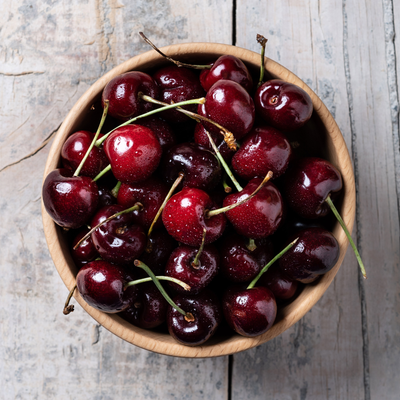
Sweet cherries contain several antioxidants and polyphenols known for their wide range of health benefits, from fighting inflammation to protecting against oxidative stress.
Read More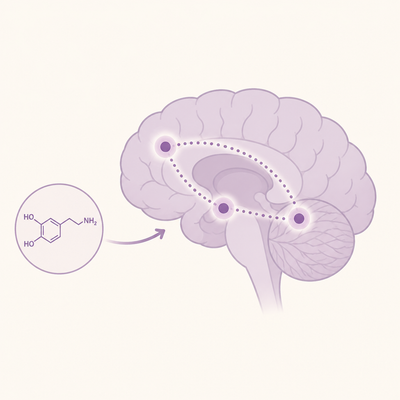
We study how brain signalling systems, including dopamine, change with age and shape metabolism, behaviour, and cognitive health.
Read More
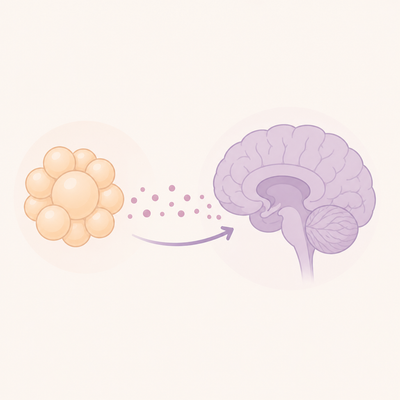
Naked mole-rats are exceptional creatures with many unique traits that make them an ideal model system to study healthy aging.
Read More
Team
#Helferlab group
From left: Katie Hanna, Haesung Yun, Junior Bowen, Gi Helfer, Francesca Manocchio (BSN meeting Exeter, 2024)
Hafsat Kari
PhD Student
Hafsat studies circadian rhythms in naked mole rats to understand how biological clocks influence heatlh and ageing.
Fiona Smith
PhD student
Fiona is a PhD student using bioinformatics to explore how mitochondrial function shapes metabolic health.
Previous #Helferlab members
Work with us
- University of Bradford, Richmond Road, Bradford, West Yorkshire, BD7 1DP
We welcome collaborations with researchers, industry partners, and students interested in metabolism, brain health, and ageing.
Publication list
Peer-reviewed publications
- Bowen, J, Hanna, K, Young, AMJ, Helfer, G* and McLean, SL (2026) The role of dopamine signaling and neuroinflammation in age-related cognitive dysfunction. Brain Behav 16:e71395
- Helfer, G and Manocchio, F (2025) Sex-specific hypothalamic remodelling: seasonal rhythms of hibernation. Physiol Genomics 58(1).
- Manocchio, F, Bravo, FI, Helfer, G* and Begona, M (2024) Cherries with different geographical origins regulate neuroprotection in a photoperiod-dependent manner in F344 rats. Antioxidants, 13(1): 72.
- Helfer, G, M Kadmiel, and PH Jethwa, Editorial: Women in integrative physiology. Frontiers in Physiology, 2022. 13.
- Yun, H, Dumbell, R, Hanna, K, Bowen, J, McLean, SL, Kantamneni, S, Pors, K, Wu, QF and Helfer, G* (2022) The chemerin-CMKLR1 axis is functionally important for central regulation of energy homeostasis. Front Physiol, 30 May 2022.
- McLean, SL, Yun, H, Tedder, A and Helfer, G* (2021) The effect of photoperiod and high fat diet on the cognitive response in photoperiod-sensitive F344 rats. Physiol Behav, Oct 1 (239):113496.
- Mu, W, Li, S, Xu, J, Guo, X, Wu, H, Chen, Z, Qiao, L-Y, Helfer, G, Lu, F, Liu, C and Wu, QF (2021) Hypothalamic Rax+ tanycytes contribute to tissue repair and tumorigenesis upon oncogene activation in mice. Nat Comm, 12(1): 2288
- Helfer, G and Stevenson, TJ (2020) Pleiotropic effects of proopiomelanocortin and VGF nerve growth factor inducible neuropeptides for the long-term regulation of energy balance. Mol Cell Endocrinol, Aug 20 (514): 110876.
- Helfer, G* and Dumbell R (2020) Endocrine drivers of photoperiod response. Curr Opin Endocrine Metabol Res, 11 (4): 49-54.
- Helfer, G*, Barrett, P and Morgan, PJ (2019) A unifying hypothesis for control of body weight and reproduction in seasonally breeding mammals. J Neuroendocrinol, 31(3): e12680.
- Helfer, G and Wu QF (2018) Chemerin: a multifaceted adipokine involved in metabolic disorders. J Endocrinol, 238(3): R79-R94.
- Stoney, PN, Rodrigues, D, Helfer, G, Khatib, T, Ashton, A, Hay, EA, Starr, R, Kociszewska, D, Morgan, PJ and McCaffery, PJ (2017) A seasonal switch in histone deacetylase gene expression in the hypothalamus and their capacity to modulate nuclear signaling pathways. Brain Behav Immun, 61: 340-352.
- Helfer, G, Ross, AW, Thomson, LM, Mayer, CD, Stoney, PN, McCaffery, PJ and Morgan, PJ (2016) A neuroendocrine role for chemerin in hypothalamic remodelling and photoperiodic control of energy balance. Sci Rep 6: 26830.
- Helfer, G and Tups, A (2016) Hypothalamic Wnt signalling and its role in energy balance regulation. J Neuroendocrinol, 28(3): 12368.
- Bouscein, A, Benzler, J, Hempp, C, Stoehr, S, Helfer, G and Tups, A. (2016) Photoperiodic and diurnal regulation of WNT signalling in the arcuate nucleus of the female Djungarian hamster, Phodopus sungorus. Endocrinology, 157 (2): 799-809.
- Stoney, PN, Helfer, G, Rodrigues, D, Morgan, PJ and McCaffery, PJ (2016) Thyroid hormone activation of retinoic acid synthesis in hypothalamic tanycytes. Glia, 64(3): 425-439.
- Bolborea, M, Helfer, G, Ebling, FJP and Barrett, P (2015) Dual signal transduction pathways activated by TSH receptors in rat primary tanycyte cultures. J Mol Endocrinol, 54(3): 241-250.
- Ross, AW, Russell, L, Helfer, G, Thomson, LM, Dalby, M and Morgan, PJ. (2015) Photoperiod regulates lean mass accretion, but not adiposity, in growing F344 rats fed a high fat diet. PLoS One, 10(3): e0119763.
- Tavolaro, FM, Thomson, LM, Ross, AW, Morgan, PJ and Helfer, G* (2015) Photoperiodic effects on seasonal physiology, reproductive status and hypothalamic gene expression in young male F344 rats. J Neuroendocrinol, 27(2): 79-87.
- Helfer, G, Ross, AW and Morgan, PJ (2013) Neuromedin U partly mimics thyroid stimulating hormone and triggers Wnt/β-Catenin signalling in the photoperiodic response of F344 rats. J Neuroendocrinol, 25(12): 1264-1272.
- Helfer, G, Ross, AW, Russell, L, Thomson, LM, Shearer, KD, Goodman, TH, McCaffery, PJ and Morgan, PJ (2012) Photoperiod regulates vitamin A and Wnt/β-Catenin signalling in F344 rats. Endocrinology, 153(2): 815-824.
- Shearer, KD, Stoney, PN, Helfer, G, Ross, AW, Morgan, PJ and McCaffery, PJ (2012) Photoperiodic expression of two RALDH enzymes and the regulation of cell proliferation by retinoic acid in the rat hypothalamus. J Neurochem 122(4): 789-799.
- Jones, C, Helfer, G and Brandstaetter, R (2012) Melatonin receptor expression in the zebra finch brain and peripheral tissues. Chronobiol Int 29(2): 189-202.
- Ross, AW&, Helfer, G&, Russell, L, Darras, VM and Morgan, PJ (2011) Thyroid hormone signalling genes are regulated by photoperiod in the hypothalamus of F344 rats. PLoS One, 6 (6): e21351. &Authors contributed equally
- Helfer, G, Fidler, AE, Vallone, D, Foulkes, NS and Brandstaetter, R. (2006) Molecular analysis of clock gene expression in the avian brain. Chronobiol Int 23 (1-2): 113-127.
* corresponding author
Funding bodies